 Convergic
 Most language apps give everyone the same lesson.
Convo watches what you actually get wrong and builds the next one from it.
Portuguese (Brazil) today, with more languages coming.
There is a tutor on every page
Not a chatbot in a corner that has to be told where you are. Open it anywhere in Convo and it already knows: which lesson you are in, which sentence you just got wrong, which word the review queue keeps handing back to you. Ask "why is it fui and not era" and you get the answer about the sentence in front of you.
It remembers, too. If you let it, the tutor carries what you have covered between sessions, so the third lesson knows what happened in the first.
34 of Convo's 39 screens hand the tutor what you are looking at. The exceptions are sign-in, onboarding, guided lessons and mixed review. Guided lessons and mixed review record answer-bearing help through their own coach.
The course is a map, not a list
Under Convo is a graph of the language: concepts joined by what has to come first. Each one carries a plain statement of what it lets you do, in the CEFR's own idiom - "you can say when something happened" - rather than a grammar label. Your lessons are drawn from the parts of that map you have not covered, so nobody walks the same fixed path.
Learn it, prove it, then use it
A new concept opens with a short taught lesson, not a quiz you fail your way through. Then a check you have to pass. Only then does it turn into practice, review and homework you can print. That order is the whole structure, and it is why the practice is not guesswork.
19 ways to practice, because one is not enough
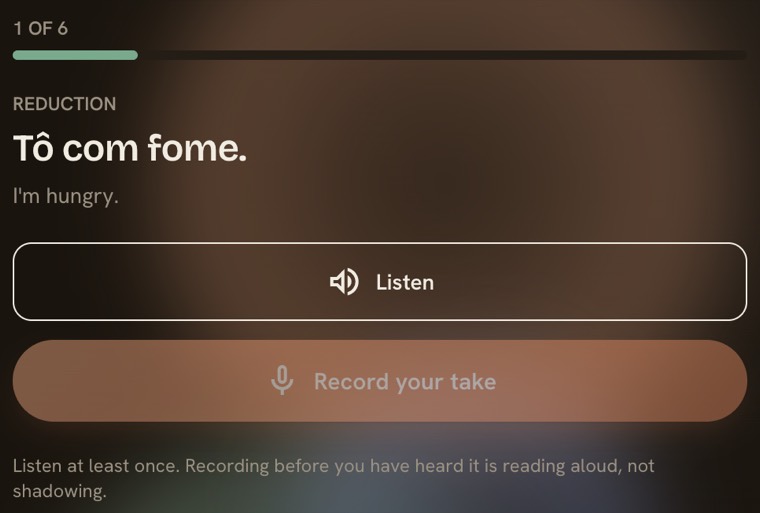
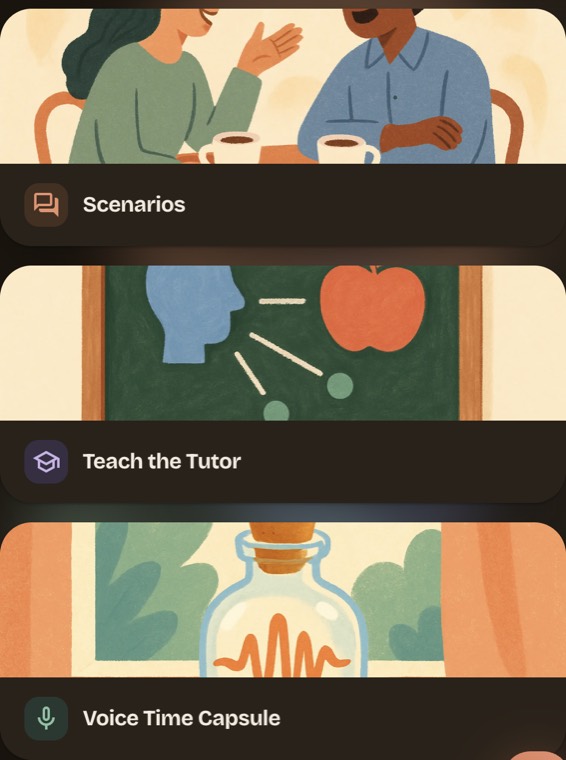
Speaking a language is not one skill. Convo drills the parts separately: minimal pairs for sounds you cannot yet hear apart, shadowing for rhythm, circumlocution for the word you do not know yet, false cognates, collocations, speed listening, spoken numbers, word order, conjugation. 19 in all, each aimed at something specific that goes wrong.
- Reading
- Writing
- Listening
- Speaking
CEFR, used honestly
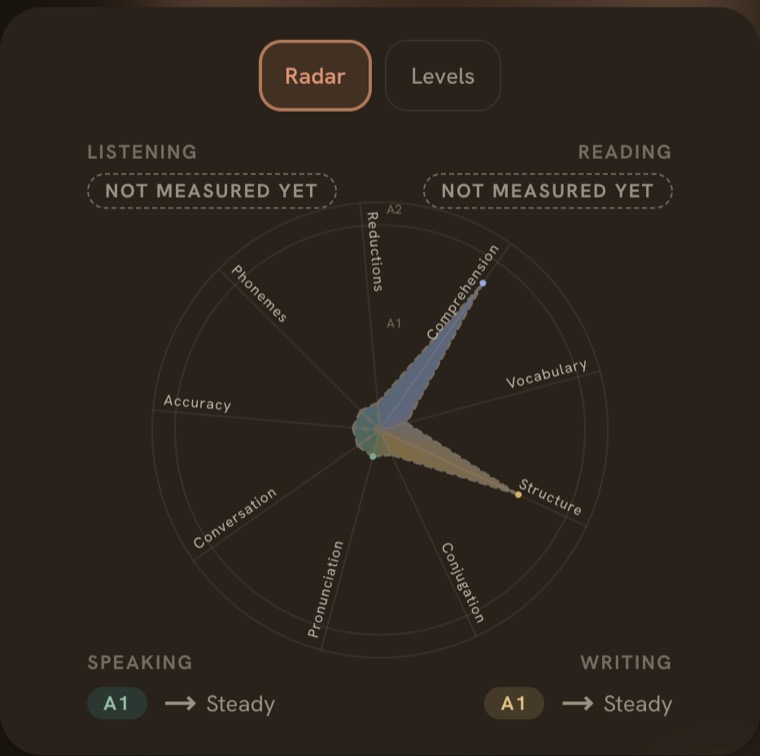
Convo tracks a CEFR band for each of the four skills, and it is a coverage band: how far through the map that skill has taken you. It only goes up, because material you have covered does not become uncovered. It is not a score pretending to be a certification, and Convo will not tell you that you are B1 on the strength of a quiz.
Four skills, tracked apart, because they do not move together.
How this is different
The popular apps are built to be opened daily. That is a real achievement and it is not the same thing as being built to make you fluent.
What you get
- A taught mini-lesson for every new concept, with a check you have to pass
- 19 practice activities across reading, writing, listening and speaking
- Spoken conversation with feedback on what you said and how you said it
- Spaced review that returns a word just before you would forget it
- Homework you can print
- A tutor on every screen that knows which screen you are on
About the AI, plainly
Convo uses AI to generate lessons and hold conversations. It asks your permission before sending anything to a provider, and tells you who receives it - OpenAI and Anthropic, the companies whose models power the conversation. Both state that data sent through their APIs is not used to train their models. That is their policy rather than something Convo controls, and the app says so in those words too.
Your name never goes with it. What gets sent is the language work itself - the sentence you wrote, the phrase you recorded, the lesson you are on. Your name, your email address and your account number stay here. There is no field on the request that says who you are, so to the model on the other side you are a piece of Portuguese homework and nothing else.
Nothing is sent until you say so. The permission screen is not a banner you dismiss - until you agree, the tutoring features do not run. Letting the tutor remember between sessions is a second, separate choice, off unless you make it, and you can turn it back off in Settings whenever you like.
Leaving takes it all with you. Deleting your account deletes your account, including what the tutor remembered. No email thread, no retention offer, no thirty-day grace period during which we still have it.
Portuguese (Brazil) today, with more languages coming.